


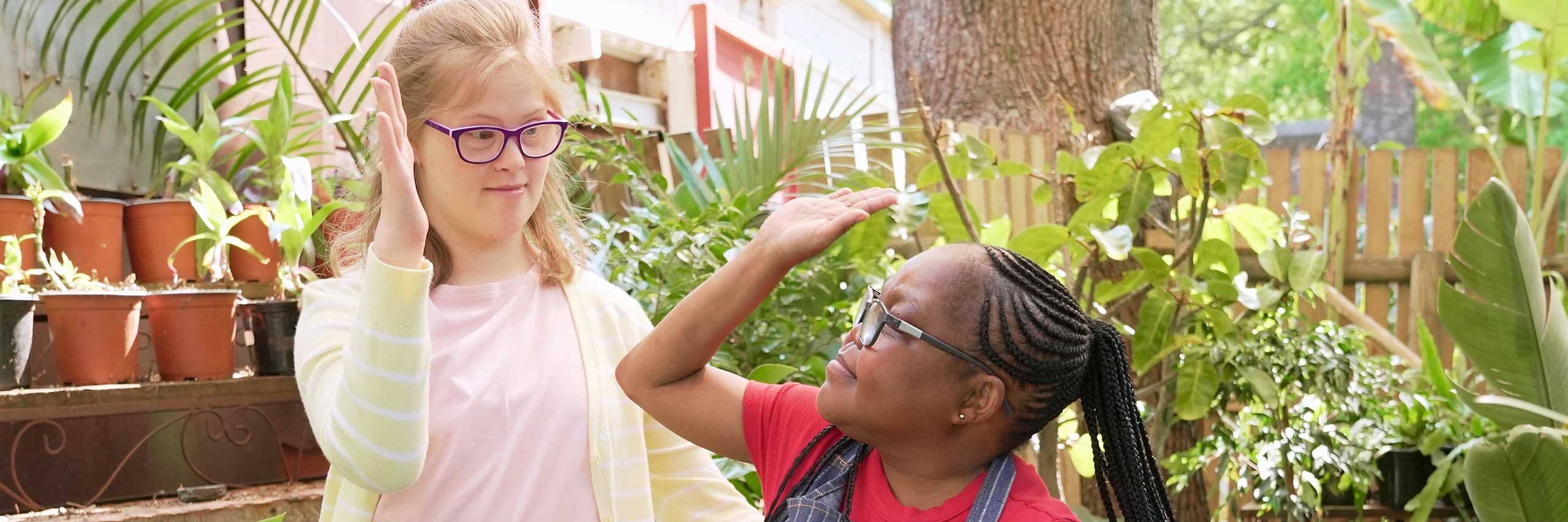
Family & Children’s Services provides mental health services designed specifically for individuals living with intellectual and developmental disabilities (IDD).
We recognize that individuals with IDD experience mental health challenges just like anyone else—and often face barriers to care.
Our services are intentionally adapted to meet diverse communication, learning, sensory, and support needs.
We offer person‑centered, trauma‑informed mental health care, including support for individuals with autism and others in the neurodivergent community.
Our IDD/ASD‑informed mental healthcare services include:
- Therapy services to support emotional and behavioral health needs, including anxiety, depression, trauma, suicidal thoughts, and crisis‑related concerns
- Care coordination and case management to help individuals and families navigate services and connect with needed resources
- Employment and education supports that promote independence, stability, and meaningful community involvement
- Medication and medical support, when appropriate, as part of an integrated approach to overall well‑being
- Crisis support and intervention to provide timely assistance during urgent or high‑stress situations
Support for Families and Caregivers
We work in partnership with families, guardians, and support teams—while centering the voice, preferences, and goals of the individual receiving services. Caregivers and supporters are an essential part of the care team and are included in planning and coordination as desired by the individual.
What to Expect When You Call for IDD-Informed Mental Health Services
When You Call Us
Calling for help can feel hard. That’s okay. When you call FCS, we are here to listen.
Who Answers the Phone
A real person will answer your call. They are trained to help people with IDD, autism, and different communication needs. They will be kind, calm, and respectful.
How We Will Talk With You
We will go at your pace. You can ask us to slow down, repeat things, use different words, or take breaks.
You do not need the right words to call us.
You Can Have Support
You can call by yourself or with a family member, caregiver, or support person. If someone helps you communicate, that is okay.
What We May Ask About
We may ask why you are calling, what feels hard right now, what helps you feel better, how you like to communicate, and if you are safe. You can tell us if a question feels confusing.
What We Will Do
We will listen, treat you with respect, believe what you tell us, not rush you, and explain next steps before the call ends.
What We Will Not Do
We will not rush you, judge you, talk over you, or ignore what you say. You matter.
You Can Ask for What You Need
You can ask for more time, simpler words, breaks, quieter talking, or help communicating. You can ask at any time.
You Are Not Alone
You do not have to figure this out by yourself. We are here to help, one step at a time.
Our goal is to provide accessible, respectful, and coordinated mental health care that strengthens well‑being, builds on individual strengths, and supports a meaningful quality of life.
Learn more about our IDD partners and community collaborators